The Science Behind Why Camp Transforms Your Child
You pick your child up at the end of the summer. They look different. Not just taller, or tanner. Something else. They seem more settled in themselves. More confident. They talk about their counselor the way some people talk about a mentor they had in their twenties.
You try to explain it to a friend who doesn't have a camp child, and you fumble for the words. "They just... grew," you say. "Camp does something."
You're right. It does. And now there's science to explain exactly what that something is.
It's Not Magic. It's Chemistry.
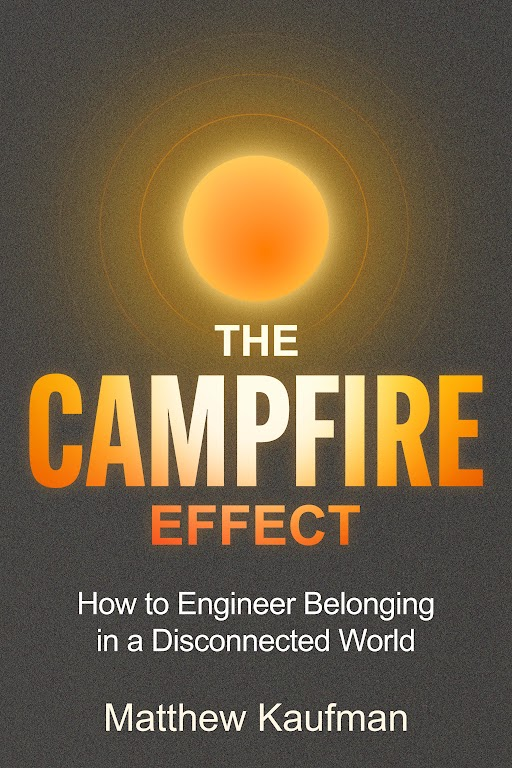
Matt Kaufman has spent more than 40 years inside summer camp as a camper, counselor, and director. His new book, The Campfire Effect: How to Engineer Belonging in a Disconnected World, is his attempt to decode what most camp parents have always sensed but struggled to articulate.
His argument: camp works because it is designed, whether directors realize it or not, to trigger five specific neurochemical responses in the brain. These responses, in a specific sequence, produce the exact conditions under which human beings grow, connect, and thrive.
He calls this sequence The Campfire Effect, and once you understand it, you will never look at the summer quite the same way.
The Five Chemicals Behind Your Child's Best Summer
Oxytocin
Oxytocin is the first and most important. It is the brain's trust chemical, and it gets released when people feel safe, seen, and part of something. Before a child can grow at camp, they have to belong there. The rituals you hear about, the bunk chants, the inside jokes, the goofy traditions at the flagpole, are not random. They are the delivery mechanisms for oxytocin. Your child's brain is registering "I am safe here" dozens of times a day.
Dopamine
Once safety is established, dopamine enters the picture. This is the chemical of motivation and anticipation. Camp is exceptionally good at creating visible, attainable goals. The buoy a child swims to for the first time. The bell on the climbing wall. The color war championship. These are not just fun activities. They are dopamine targets, and when a child reaches one, the brain rewards the effort in a way that builds intrinsic motivation over time.
Cortisol
Growth also requires stress, and that is where cortisol comes in. A ropes course is not just fun. It is a controlled cortisol spike, a moment of genuine fear experienced within a circle of support. Camp uses challenge this way deliberately. The result is resilience. When a child faces something hard at camp and gets through it with the help of their bunk and counselor, they are doing something neurologically meaningful. They are building a template for handling difficulty that they carry home with them.
Serotonin
Serotonin is the chemical of dignity and status, and camp activates it in an unusual way. Most institutions offer only a few narrow paths to being recognized: grades, athleticism, popularity. Camp multiplies those paths. The quiet child who becomes the cabin peacemaker gets seen. The child who helps a homesick bunkmate earns respect. Serotonin rises when a child feels like they matter to the group, and at camp, there are more opportunities to matter than almost anywhere else.
Endorphins
Finally, endorphins seal the cycle. The dining hall songs. The skits. The ridiculous camp-wide celebrations. These are not filler. They are the neurochemical fuel that renews energy and prepares the brain to start the whole cycle over again.
What This Means for You as a Parent
Here is what Kaufman's framework suggests for families.
The growth your child experiences at camp is not just a product of fresh air and freedom from screens. It is the result of a carefully constructed environment that most schools, and most homes, are not built to replicate. That does not mean you cannot borrow from it.
The simplest takeaway is this: belonging before achievement. At camp, a child is not asked to perform before they feel safe. They are given rituals, routines, and community first. If you are wondering why your child seems to try harder at camp than at home or in school, that sequence may be part of the answer.
The second takeaway is that visible goals matter. When a child can see what they are working toward and experience quick feedback on their progress, motivation follows naturally. Invisible or distant goals, grades that come weeks later, abstract praise, do not have the same effect.
The Campfire Effect is not a parenting book, and it is not a book only for camp professionals. It is a book about how belonging gets built, and why some environments produce it naturally while others seem to resist it no matter what.
For camp parents, it offers something valuable: a language for the thing you have always known. You sent your child to camp because something about it felt right. This book explains why you were correct.
You can find it on Amazon here: The Campfire Effect: How to Engineer Belonging in a Disconnected World
About the Author
Matt Kaufman has spent 40 years in summer camp as a camper, counselor, and director, studying what makes people belong, grow, and thrive. He writes about intentional community, leadership, and the intersection of technology and human connection.
Connect with Matt:
- Instagram: @mattlovescamp
- LinkedIn: Matt Kaufman
- Website: ilove.camp
Books by Matt Kaufman: